
💡 Member Spotlight: Lourdes Gant

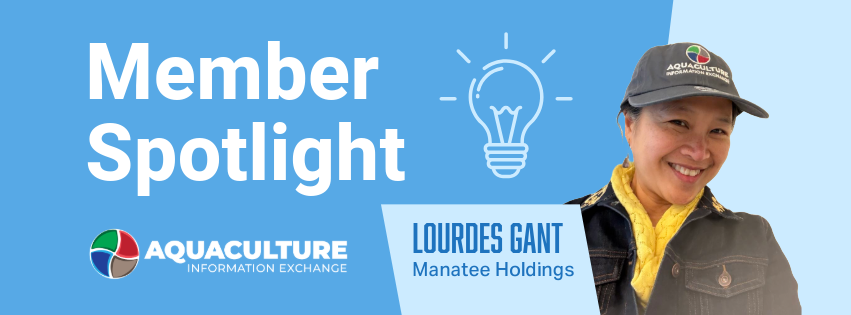
This week we are featuring Lourdes Gant @lgant with Manatee Holdings, who won last year’s AIE award for Outstanding Educator. We spoke with her about sustainable aquaculture, her background in geoduck ranching, and her thoughts on the future of the industry. Enjoy! -Joe
AIE: How did you first get involved in aquaculture, and what inspired you to focus on
sustainability within the industry?
Lourdes: I got involved in aquaculture over two decades ago when I got married into the family
firm. My husband who is also my business partner saw an opportunity to align business
with environmental stewardship 3 decades ago when he was seeing the devastating
impact that the fishermen were doing in the ocean’s ecology, him being a commercial
fisherman at that time with 10,000 hours under the sea. The ocean has always been a
source of both livelihood and inspiration for me, and I wanted to be part of a solution that
could support both. Early on, we realized that traditional practices often came at a cost to
ecosystems, which led our company to champion more sustainable approaches.
Sustainability isn’t just a buzzword—it’s the foundation of long-term viability in
aquaculture. Our commitment is to ensure that the ocean’s bounty can be enjoyed by
future generations without depleting its resources today.
AIE: You’ve been recognized for your leadership in aquaculture—what’s a project or
milestone you’re especially proud of?
Lourdes: One of my proudest milestones is leading Manatee Holdings to become a global pioneer
in sustainable geoduck ranching. We’ve developed a model that respects marine
ecosystems while creating meaningful economic impact for our community. Our work
has influenced policies, improved biodiversity, and proven that high-value aquaculture
can thrive without compromising the environment. Receiving recognition for these
efforts—like being named Educator of the Year (from The Business of Aquaculture
podcast and our Blue Ocean Revolution virtual events) from the Aquaculture Information
Exchange—reinforces that impact and education go hand-in-hand. It’s deeply fulfilling to
see our values reflected in both our operations and the broader industry dialogue. I also
recently authored a new book called “The Sustainability Code: AI for Sustainable
Farming” (Farm to Future Book 1 out of 3), pre-order Kindle version on Amazon now.
AIE: What do you wish more people understood about sustainable aquaculture or the
work you do at Manatee Holdings?
Lourdes: I wish more people understood that sustainable aquaculture is one of the most powerful
tools we have to combat overfishing and climate change. At Manatee Holdings, we don’t
just grow shellfish—we nurture ecosystems and invest in long-term marine health. Our
team works tirelessly to innovate and adapt practices that minimize our footprint and
maximize regenerative outcomes. Sustainability is not a static goal; it’s a continuous
journey that requires vision, commitment, and education. When people understand the
science and ethics behind our work, they often become our strongest allies.
AIE: How do you see the role of technology—especially tools like AI—evolving in
aquaculture over the next few years?
Lourdes: Technology, particularly AI, has already transformed aquaculture from reactive to
predictive. At Manatee Holdings, we’re exploring how AI can help us analyze
environmental data, optimize grow out management, and increase survival rates for our
species. As the climate becomes more volatile, AI will be critical in helping us make
real-time decisions based on data rather than assumptions. It will also enhance
traceability and transparency, which are increasingly important to both regulators and
consumers. We believe the fusion of tradition and technology will define the next era of
aquaculture.
AIE: What’s one piece of advice you’d give to someone new to the aquaculture field,
especially those interested in entrepreneurship or innovation?
Lourdes: Be mission-driven, not just profit-driven—this industry needs people who care deeply
about both people and the planet. Learn the science, respect the ocean, and don’t be
afraid to question outdated norms. Entrepreneurship in aquaculture requires resilience,
creativity, and a willingness to work with nature rather than against it. Surround yourself
with mentors and allies who challenge and support you in equal measure. And finally,
embrace innovation early, because the future of aquaculture belongs to those who lead
with purpose and adaptability.
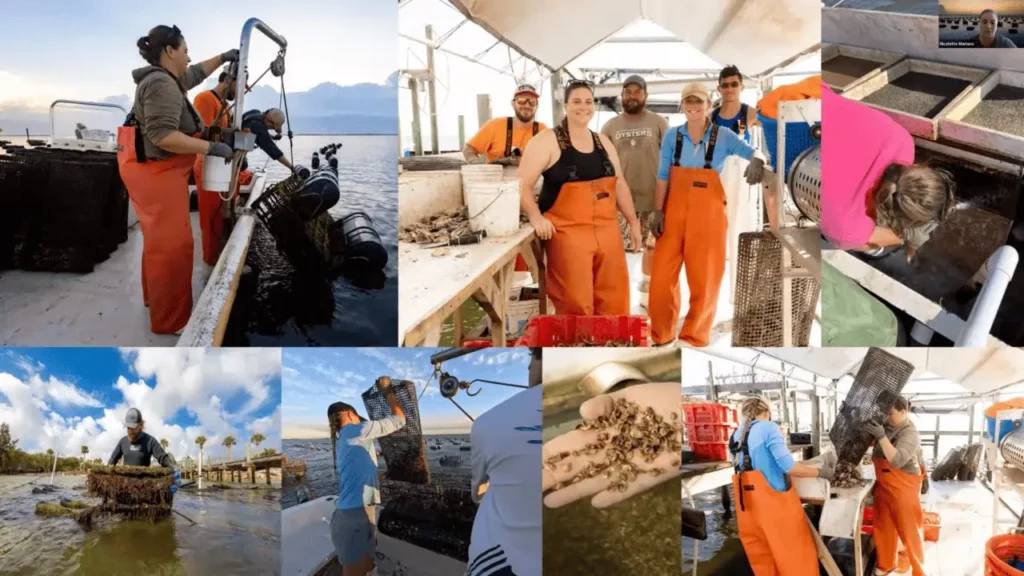
Thank you so much for this @Joe and AIE team 🙂